What wine is Kelowna known for?
Kelowna is known for cool-climate Pinot Noir, Chardonnay and Riesling, plus a proud ice-wine heritage. Here are the grapes, the terroir and where to taste them.
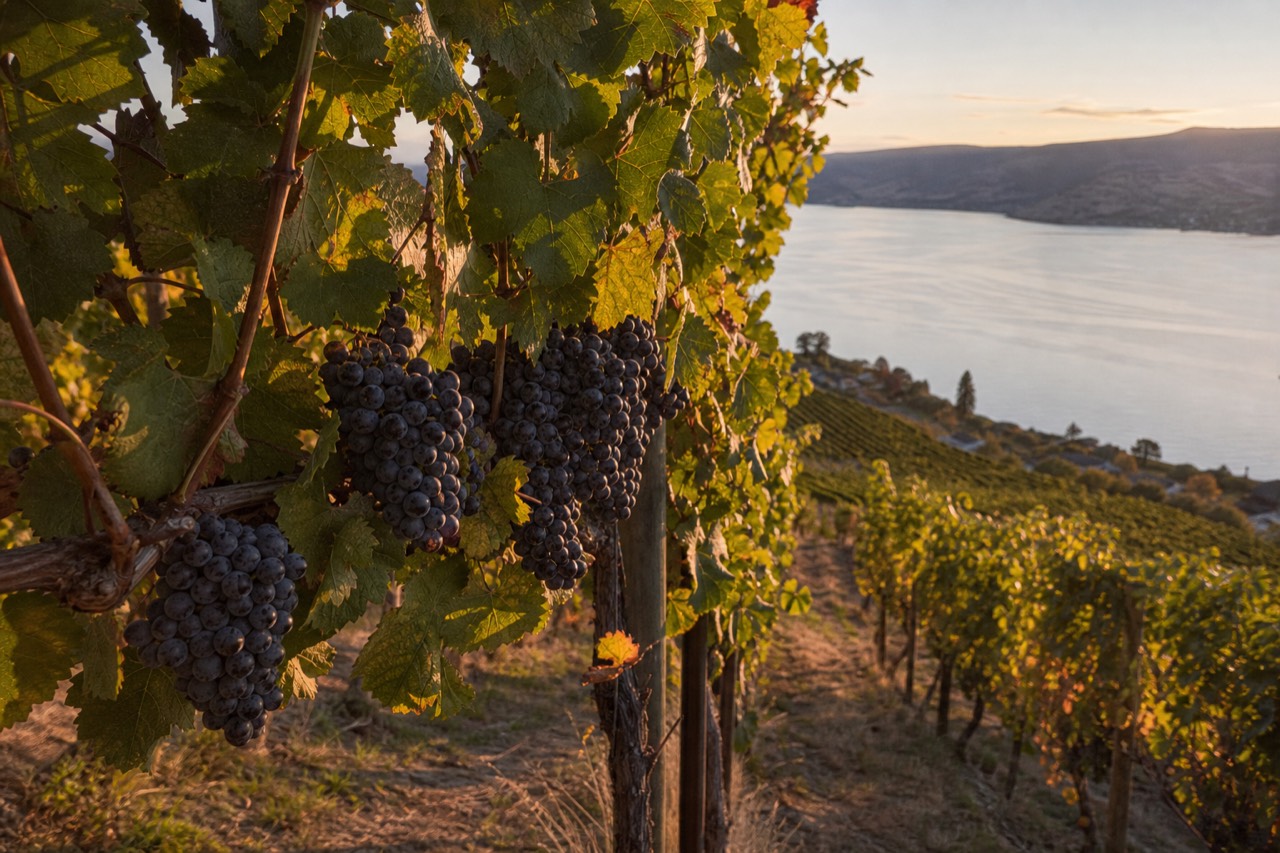
Cool nights are the whole story of Kelowna wine. The valley sits near the 50th parallel, further north than most vineyards on the continent, and the long summer days ripen the fruit while the cold nights hold onto the acidity warmer regions lose. That balance is why the wines taste the way they do, and it points straight at the grapes the region has become known for.
What wine is Kelowna known for?
Kelowna is known above all for cool-climate Pinot Noir, Chardonnay and aromatic Riesling, the three grapes its lake-moderated slopes ripen best. The region also carries a proud ice-wine heritage and turns out strong sparkling and Bordeaux-style reds at its warmer sites. If one grape flies the flag, it is Pinot Noir.
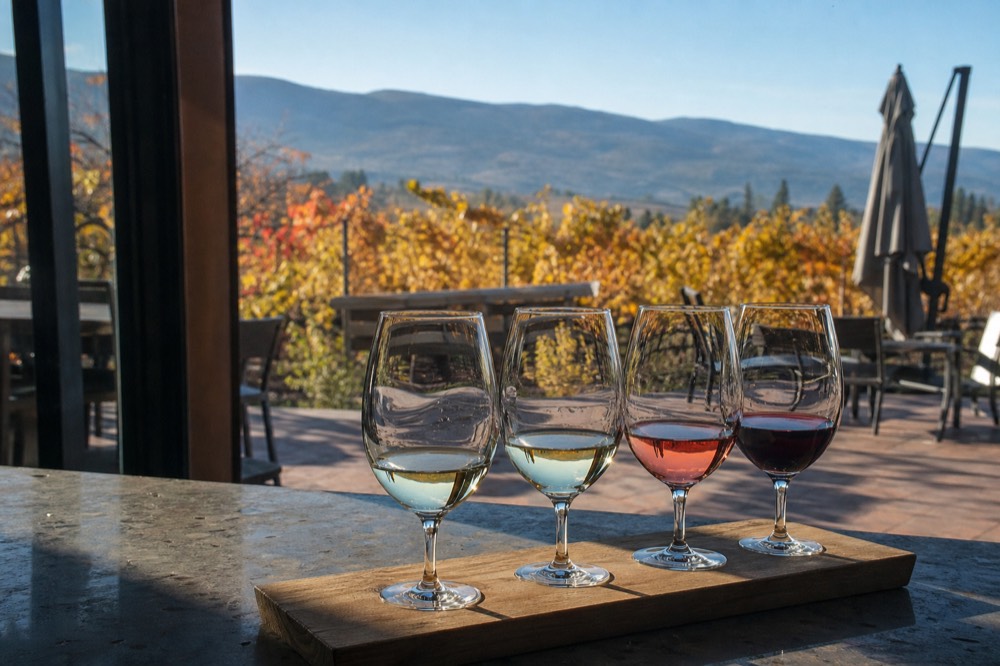
Walk into almost any Kelowna tasting room and the flight tells the same story: a crisp Riesling or unoaked white to open, a rounder Chardonnay in the middle, and a Pinot Noir the room is quietly proudest of. These are cool-climate wines, built on acidity and aromatics rather than the heavy, high-alcohol style of hot regions further south, and the five S's of wine tasting are the simple way to read those aromatics in the glass. Quails' Gate on the Westside has made some of the country's most reliable Pinot Noir for decades, and Tantalus on the East Kelowna slopes makes Riesling from some of the valley's oldest vines, so both flagship grapes have a Kelowna standard-bearer.
Ice wine is the other name Kelowna carries, though it is heritage now more than everyday output. It needs sustained cold near minus eight degrees to freeze the grapes on the vine, and recent winters have not cooperated: only 36 tonnes of ice-wine grapes came off in 2025. So it stays a small-batch specialty. For the cellar doors behind these wines, the Kelowna wineries worth a day lays them out by area.
| Grape or style | The Kelowna character | Where it shines |
|---|---|---|
| Pinot Noir | Bright, red-fruited, cool-climate elegance | The flagship red, valley-wide |
| Chardonnay | From crisp and unoaked to rounded and creamy | Westside and lakeshore estates |
| Riesling | Aromatic, mineral, high natural acidity | East Kelowna slopes, old vines |
| Sparkling | Fresh, traditional-method fizz | Lakeshore organic estates |
| Ice wine | Intense, sweet, a cold-winter specialty | Small-batch heritage bottlings |
Why does the terroir suit these grapes?
Okanagan Lake is the engine. It stores summer heat and releases it slowly, softening frost and stretching the season on the benches above the water. Add the far-north latitude, long daylight, cool nights and fast-draining glacial soils, and you get ripe fruit that keeps its acidity, exactly what Pinot Noir, Chardonnay and Riesling want.
The deep lake acts as a heat battery, moderating the vineyards on the slopes around it, which is why the best sites hug the water. That moderation, plus the long summer days the latitude brings, ripens the grapes fully, and the cold nights then preserve the acidity that gives cool-climate wines their nerve. Warmer regions ripen easily but lose that freshness; Kelowna's trick is getting both. The sandy, gravelly soils drain fast and make the vines work, which concentrates flavour, and it is the same mix that has drawn roughly 186 licensed wineries into the Okanagan, holding close to 87 percent of the province's vineyard land.
One honest footnote belongs here. A deep freeze in January 2024 cut the crop by 95 to 99 percent, and under a temporary provincial program wineries could use imported Washington and Oregon fruit for the 2024 and 2025 vintages. So a bottle from those years may not be entirely Okanagan-grown, even where the varieties match, and the 75-85-95 labeling rule is what governs how much a place name on a bottle really promises. The program was not extended to 2026, and the valley is moving back toward full local fruit.
Which Kelowna wineries are known for these wines?
Mission Hill is the headline name, crowned Canada's Winery of the Year for 2025 and the only Canadian entry on the World's 50 Best Vineyards. Quails' Gate is the Pinot Noir benchmark, Tantalus the old-vine Riesling one, CedarCreek and Summerhill the organic lakeshore stars, and SpearHead the decorated small producer on the slopes.
Follow the reputations and you find the grapes at their best. Mission Hill was named Winery of the Year at the 2025 national wine awards, its sixth time, and by December it was the only Canadian name on the World's 50 Best Vineyards list at number 45. Its Oculus and Perpetua are the marquee bottles. A short drive along the same shore, Quails' Gate is where the valley's Pinot Noir reputation was largely made, and its Old Vines Restaurant made OpenTable's Top 100 Most Romantic Restaurants for 2026.
For the whites, cross to the East Kelowna slopes, where Tantalus makes taut, age-worthy Riesling from old vines and SpearHead turns out decorated single-vineyard Pinot Noir. Down on the lakeshore, CedarCreek and Summerhill lean organic, with Summerhill known for its traditional-method sparkling. These names sit close together, so the Westside cellar doors and the slopes are both reachable in one well-planned day. Give it a two-day Kelowna visit and the reds can have one afternoon and the whites the next.
Where can you actually taste them?
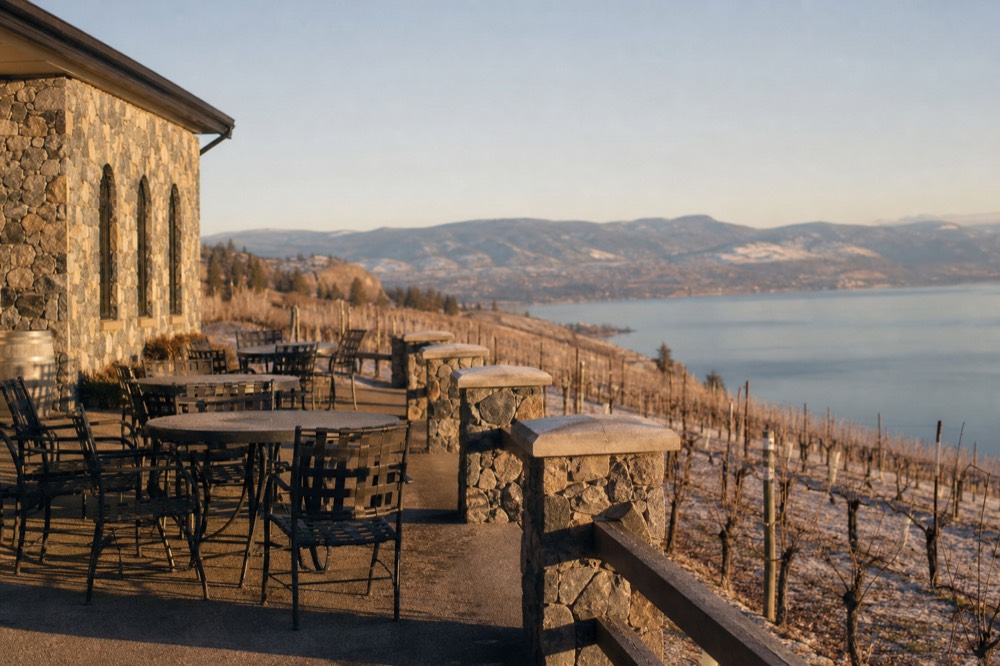
On a driven day that reaches the right cellar doors. The full-day tour around Mission Hill and Quails' Gate covers the two headline Westside names with lunch, a half-day loop keeps it short, and a private day can point at the slopes for the Riesling and Pinot. A guided day also takes the driving decision off the table.
Tasting Kelowna's signature grapes is mostly a logistics problem, because the wineries sit in pockets nobody walks between. The tidy fix is a guided day matched to the wines you care about. For the flagship reds and the iconic estates, book a day like the Mission Hill and Quails' Gate full day and check availability on the operator's listing. If a full day is more than you want, a shorter Westside half-day loop covers four wineries in about four hours, and you can check the live dates and prices before you decide.
Why book rather than drive? British Columbia's roadside limit is 0.05, and a proper tasting of Pinot, Chardonnay and Riesling across four doors adds up fast, so a guided day lets everyone taste. If Pinot Noir is the grape that pulls you south instead, how many wineries line the Naramata Bench is worth a look, since that strip is Pinot country too.
Common questions
What is Kelowna's most famous grape?
Pinot Noir is the grape most tied to Kelowna's reputation, with Quails' Gate a long-standing benchmark. Chardonnay and Riesling follow close behind, and the cool-climate slopes suit all three. Ice wine is the historic specialty, though recent mild winters have made it rarer.
Does Kelowna make good red wine?
Yes, especially Pinot Noir, which thrives in the cool nights and lake-moderated slopes. Warmer sites also turn out Bordeaux-style reds and Merlot. The style leans toward brightness and freshness rather than heavy, high-alcohol reds, which is the signature of a cool-climate region.
Is Kelowna wine actually from the Okanagan?
Usually, yes, but a January 2024 deep freeze cut the crop by 95 to 99 percent, so the 2024 and 2025 vintages could include imported Washington or Oregon fruit under a temporary provincial program. That program was not extended to 2026, and the valley is returning to full local fruit.
Cool nights, a deep lake and a far-north latitude are the reasons the glass tastes the way it does, and it is why Kelowna Wine Tours builds days around the estates that show those grapes best. Follow the Pinot, the Chardonnay and the Riesling, and you have followed the region.