What are the 5 S's of wine tasting?
The 5 S's of wine tasting are See, Swirl, Smell, Sip and Savour. Here is what each step does, when to spit, and how to work them across an Okanagan flight.
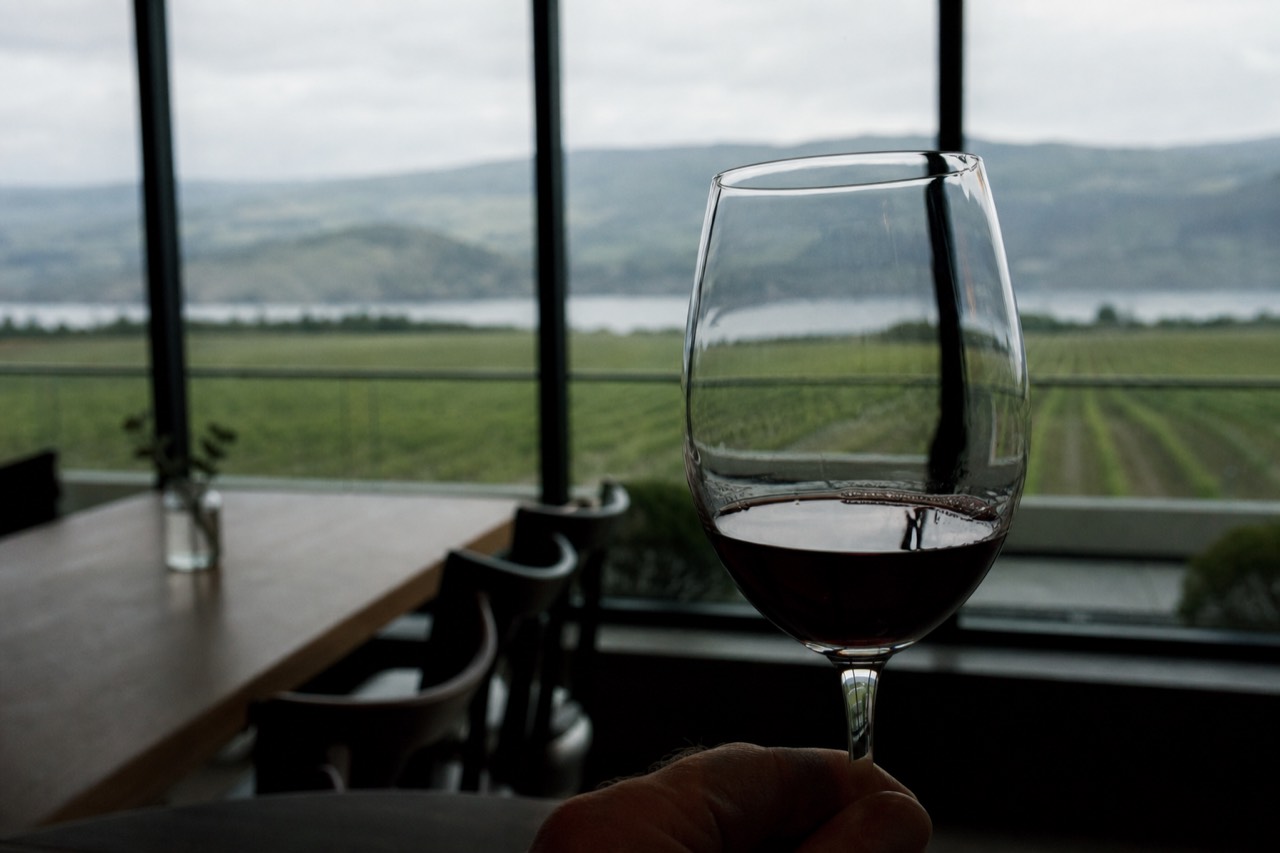
Watch a sommelier work a glass and the moves look like a ritual: a tilt to the light, a slow swirl, a nose in the bowl, a small sip held on the tongue. There is a plain framework under all of it, five steps that anyone can use, and each one pulls something out of the wine you would otherwise walk past.
What are the 5 S's of wine tasting?
See, Swirl, Smell, Sip, Savour. You look at the wine's colour and clarity, swirl to release its aromas, smell to read them, sip to taste the structure, then savour the finish. It is a simple sequence taught in wine-education settings, and it turns a quick gulp into something you actually notice. Spitting is an optional sixth move for pacing.
Each step feeds the next. Seeing sets an expectation, swirling wakes the aromas, smelling does most of the work your palate later confirms, sipping tests the balance, and savouring judges how long the wine holds. None of it is precious. It is a checklist that fits a busy tasting bar as easily as a classroom, and it works across the whites, reds and sparkling you will meet on any Okanagan tasting day. Reading the label is the other half of the skill, and the 75-85-95 rule for wine explains what the front label is allowed to claim.
| Step | What you do | What it tells you |
|---|---|---|
| See | Tilt the glass against a white background | Colour, age and clarity |
| Swirl | Rotate the glass to coat the sides | Releases aroma, hints at body |
| Smell | Short sniffs into the bowl | Most of the flavour, before you taste |
| Sip | A small mouthful, moved around the palate | Fruit, acidity, tannin, balance |
| Savour | Notice the finish after you swallow or spit | Length and quality of the wine |
See, Swirl and Smell: what do the first three steps do?
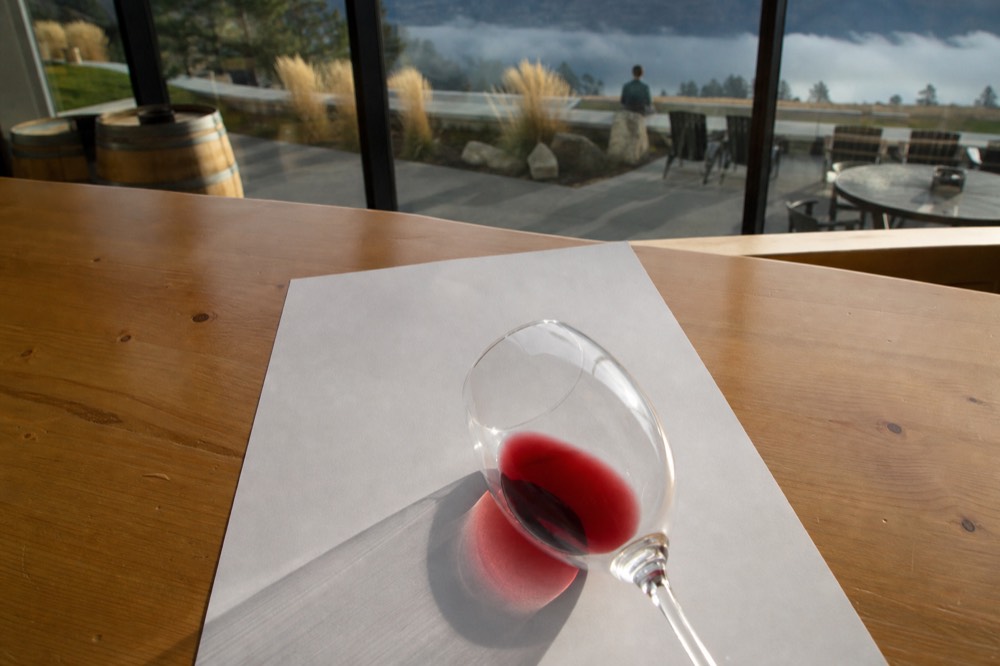
These three happen before a drop touches your tongue, and they carry most of the information. See reads colour and clarity against a white background, a hint at age and grape. Swirl coats the glass and lifts the aromas out of it. Smell, in a few short sniffs, is where you catch the fruit, the oak and the earth that your palate will only confirm a moment later.
Smell does the heavy lifting because taste is mostly aroma. A young white flashes pale and bright in the glass, an older red leans toward brick at the rim, and the swirl that looks like showing off is really just aerating the wine so those aromas escape. Take two or three short sniffs rather than one long one, since the nose resets fast. Getting comfortable with this trio is easier across a spread of wineries, which is one honest argument for a guided Westside half-day where the fees are handled and you can slow down.
Sip and Savour: how do you taste and when do you spit?
Sip is a small mouthful moved across the whole palate to read fruit, acidity, tannin and balance, not a swig. Savour is the finish, how long the flavour holds after you swallow, which separates a good wine from a forgettable one. Spitting is the optional move: it keeps your palate and your head clear across a long flight, and no one at a serious tasting bar blinks at it.
Hold the sip a couple of seconds and let it reach every part of your mouth, because acidity shows on the sides and tannin grips the front. Then pay attention after it is gone. A structured red like the ones that earned Mission Hill its 2025 Winery of the Year title will keep evolving on the finish long after a simple wine has faded. Savouring an award-level pour is the clearest way to feel what the fuss is about, and the Mission Hill and Quails' Gate full day is the direct route to it, so you can check availability on the operator's listing.
How do you practise the 5 S's across a tasting flight?
Repeat the sequence at each pour and it becomes second nature by the third winery. Pace yourself: use small sips, spit when you want to stay sharp, and drink water between stops. Dress smart-casual with closed-toe shoes for gravel paths, skip strong perfume so it does not fight the aromas, and let a guided day handle the driving so the pours can add up safely.
A tasting day is really a series of small flights, four or five wineries across an afternoon, and the 5 S's give each one a shape. A relaxed half-day loop with the fees included is the easy place to build the habit without a running tab, and you can see current dates and pricing before you book. A quick word on the room, too: tasting-bar etiquette is simple, and the same practical rules show up whether you are wondering what to wear to a winery, the winery dress mistakes to skip, or how much to leave behind.
| On a tasting day | Do | Skip |
|---|---|---|
| Footwear | Closed-toe shoes for gravel and vineyard paths | Heels or flip-flops |
| Scent | Come fragrance-free | Strong perfume or cologne |
| Pacing | Small sips, spit, water between stops | Finishing every pour |
| The drive | A guided day or a non-drinking driver | Driving yourself after a flight |
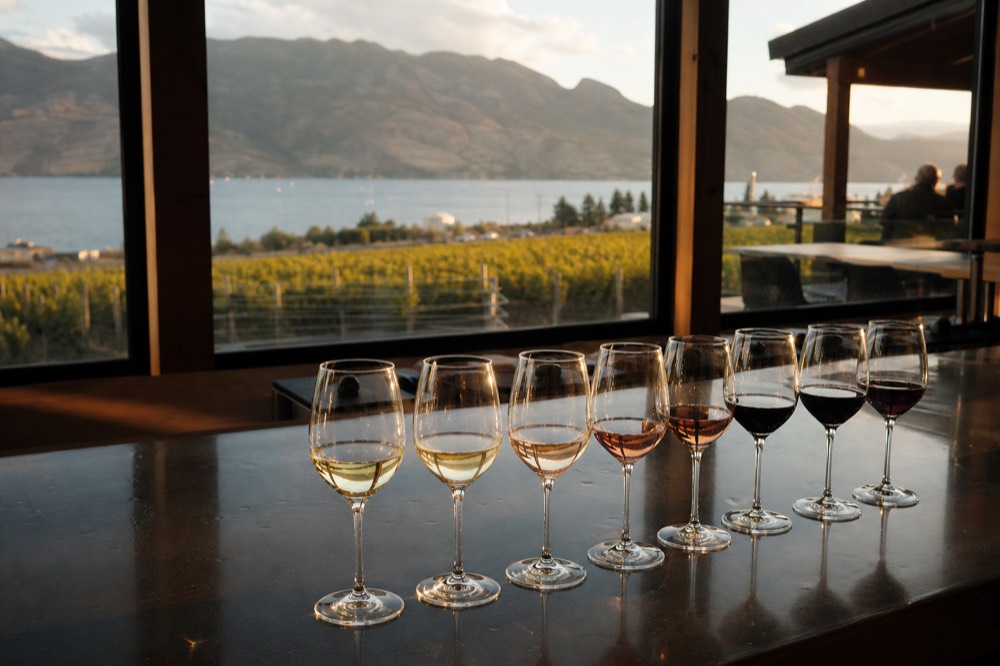
Those pours add up faster than they feel like they do, which is the practical reason to leave the car. British Columbia's roadside limit sits at 0.05, with a warn range that triggers an immediate prohibition and a short driving ban on a first offence, and the cellar doors across the region's roughly 186 wineries are not walkable between. Spit or savour, a guided day keeps the tasting the only decision you have to make.
Common questions
Is it rude to spit at a winery tasting?
Not at all. Spitting is standard practice, especially across a multi-winery day, and tasting bars often provide a bucket for it. It keeps your palate fresh and your head clear so the later pours still register. Savouring the finish first, then spitting, gives you the full read without the full glass.
Do you have to swallow to taste the wine properly?
No. Most of what you taste comes from aroma and the wine's contact with your palate, both of which you get from a held sip. Savouring the finish works whether you swallow or spit, so you lose very little by spitting, and you stay sharper across a flight.
How many wines can you taste in a day without losing your palate?
Across four or five wineries you might try twenty pours, which is plenty. Small sips, spitting and water between stops keep your palate honest late in the day. Pacing matters more than the total count, which is another reason a guided day that sets the rhythm helps.
Run the five steps at every pour and a tasting stops being a blur, which is exactly the unhurried day the team behind Kelowna Wine Tours tries to set up. See it, swirl it, smell it, sip it, savour it, and let someone else drive the road between.